Wednesday, March 30, 2011

I’m Linkin’ it: Gawaahi.com

♥

gawaahi_2

 Gawaahi.com is a new website aimed at bringing testimonials of every day Pakistanis to the rest of the world. Whether it’s the survivors of last year’s devastating flood, minorities being oppressed, or a Pakistani celebrating her heritage, the website brings it to you via videos, pictures, interviews, articles, etc.

It’s refreshing to see the perspective of those that are actually affected by the events we hear about in the news. “Official” stories do not give us a real insight because it’s not personal. Through Gawaahi.com, Naveen Naqvi, Nofil Naqvi, and Sana Saleem (founders) bring stories of everyday Pakistanis to you through digital media. These are stories that celebrate and educate. I think it’s a great initiative and I hope to contribute something to this project myself.

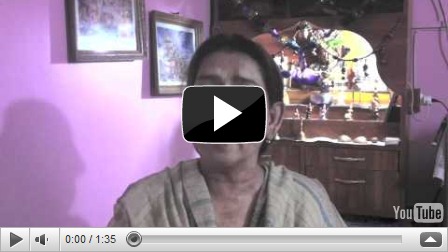
Here’s a video found on Gawaahi.com about a woman named Mangla Sharma. She is the Chairperson for the Pak-Hindu Welfare Council. She talks about protecting the Hindu temples that already exist in Pakistan, as there is a law that prohibits the enacting of new ones.

Friday, February 25, 2011

Stylish Blogger Award

♥

The Rukhpar Mor blog received the ‘Stylish Blogger Award’ from Zarina Hassem, who blogs at ‘Muslim Women Exposed’. Sister Zarina is a counselor with an M.S. in Psychology and resides in Johannesburg, South Africa. She has authored a book titled ‘7 Things to Talk About’, which deals with important issues about Islam and encourages Muslims to reflect upon these.

JazakAllah Khayr (meaning: May God grant you goodness) for the award Sister!


image

Wednesday, January 12, 2011

Talat Farooq: The Voice of Pakistan

♥

Guest post by J. Jacobs

J. Jacobs is a guest blogger for An Apple a Day and a writer on online nursing classes for the Guide to Health Education.


Talat Farooq is nothing short of extraordinary. Anyone trying to fill her shoes will have to find multiple pairs of feet, as Farooq serves as a poet, educator, human rights activist, student, columnist, and the executive editor of the Islamabad-based Criterion Quarterly. Recently, Farooq has taken up study at the University of Leicester United Kingdom, specializing in American policy towards Pakistan after the September 11th disaster. Although international affairs remain important to her, Farooq also focuses on what goes on in households behind closed doors. Farooq strives to communicate to the world about the struggles of women (Pakistani women, in particular) through her enticing poetry. Her work highlights how difficult it is for women to exercise control in a world run by men, especially in countries where women have continued to be cast aside. Through her colorful writing, Farooq helps the reader to understand the powerlessness and emptiness felt by many females across the world. One of the ways Farooq carries this out is by writing of instances of domestic violence.

Farooq has written two books of poetry, but her second book, Scheherzade, focuses largely on the many forms of abuse carried out against her beloved people. The National Language Authority (NLA) and the literary organization in Sherzad, Islamabad, came together to launch this powerful piece of literature, which has been spoken highly of by NLA chairman, Iftikhar Arif and Urdu poet and activist, Kishwar Naheed. Scheherzade incorporates the political sphere, as one cannot avoid it living as a female in Pakistan. Farooq's poems touch on certain areas of democracy and memorable events, such as the 2008 Pakistani elections, the assassination of former Prime Minister to Pakistan, Benazir Bhutto, and former President Bush's visit to Pakistan. If you seek to learn about women's empowerment, Scheherzade is a necessary read.

Personally, I honor Farooq for speaking out about some issues that frequently go ignored. Because domestic violence occurs in the private sector, many people believe that it shouldn't be brought to the forefront. Too many have been misguided to think that what happens at home should stay among the family. However, if what happens at home results in bruises, lacerations, tear-stained cheeks, or any other destruction to a human body or soul, something must be done to prevent it and/or to ensure that retribution comes to the perpetrator. I'd like to give my personal thanks to Talat Farooq for bringing this issue to the masses. As of now, certain legal blockades exist that prevent us from fully addressing domestic violence in certain parts of the world, but that doesn't mean we can't speak out against these atrocities, thus granting voices to all those who have been abused.

Additionally, abuse does not only come in the form of five fingers. Farooq's writing teaches her readers about the countless social injustices experienced by Pakistanis. Lastly, although women are often the targets, I respect Farooq for recognizing that both males and females are victims of injustices. If we are to move forward, we cannot place the blame on an entire gender, but we must work to end the cause of suffering of all sorts.

Saturday, January 1, 2011

Gurdwara Adventure

♥

I went to Houston,Texas last week to take part in a wedding. My dad’s first cousin’s son was getting married and we wanted to be part of the celebration. Since I am not a huge fan of wedding celebrations, I will just skip to the part about the adventure I had with my cousin (the groom’s sister).

We decided to take a walk in her neighborhood and small white domes caught my eye from the distance. I asked my cousin if it was a mosque and she informed me that it was actually a Gurdwara (Sikh temple).

IMG00598IMG00601

I got excited. I didn’t want to miss this opportunity to take a look inside a place of worship belonging to a religion so similar to the one I follow (i.e. Islam). So, we embarked on a journey. The Gurdwara seemed close enough from where we were, but getting there took a while. We ran into two or three dead ends before we finally figured out how to get there.

IMG00592IMG00593IMG00595

We found a nice man inside who gave us a tour of the building. We saw a shrine that holds the Holy Book called the Guru Granth Sahibji. Sikhs show utmost respect to their Gurus (religious leaders, including the last one-Guru Granth Sahibji) and when our guide entered this room, he prostrated before this shrine.

IMG00597

^shrine with Guru Gobind Sahibji

Sikhs also have the concept of ‘seva’, which means to volunteer services to their community.

We were given prashad (food served at religious ceremonies). While I devoured the prashad, I talked with a sweet lady who told us that there was a religious service every Friday for kids and every Sunday for adults. They teach the kids to play tabla (drums) because the religious ceremony often involves singing from the Scriptures.

IMG00596

^Parshad-made of flour and sugar

Here’s some other tidbits I’ve learned from Dr. Google:

-The members of the Sikh congregation that have been baptized are referred to as a ‘Khalsa’. These sikhs carry the Five K’s or ‘panch kakke’ as they are called-kara (bracelet),  kanga (comb), kes (uncut hair), kachha (undergarment), and kirpan (dagger).

-There are eleven gurus, of which the last one is the Guru Gobind Sahibji. The tenth guru established that the last and final guru be the Holy Text that he left behind.

Here’s to a new year with many new adventures to come! =)

Saturday, December 11, 2010

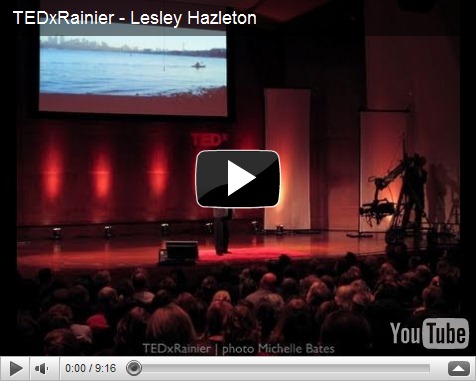
Weekend Video: Agnostic Jewish Woman on the Koran

♥


Snippets:

"Part of the problem is that we can't read the Koran like any other book"

"The Arabic has a hypnotic quality that begs to be heard rather than read"

Lesley Hazleton blogs at The Accidental Theologist.

I plan on reading her book “After the Prophet: the Epic Story of the Shia-Sunni Split in Islam”, as well as her upcoming book about the Biography of the Prophet (peace be upon him).

Technorati Tags: ,,
Related Posts Plugin for WordPress, Blogger...